Watch the conversation: CPA.com CEO Erik Asgeirsson and technology executive David Wyle unpack key insights from the 2026 CPA.com and AICPA Executive Roundtable on Town Hall.
To borrow a line from Ernest Hemingway, AI in accounting and finance has arrived "gradually, then suddenly." It's changing how work gets done and how firms create value, and it's raising the stakes on what it means to be a trusted advisor.
No single tool can meet that moment on its own. Firms get the most value when the tools in their tech stack work together, which means the companies building those tools must also work together for the benefit of their clients. We call it “co-opetition", and it’s what makes the Executive Roundtable such a powerful event to help shape what’s next for firms.
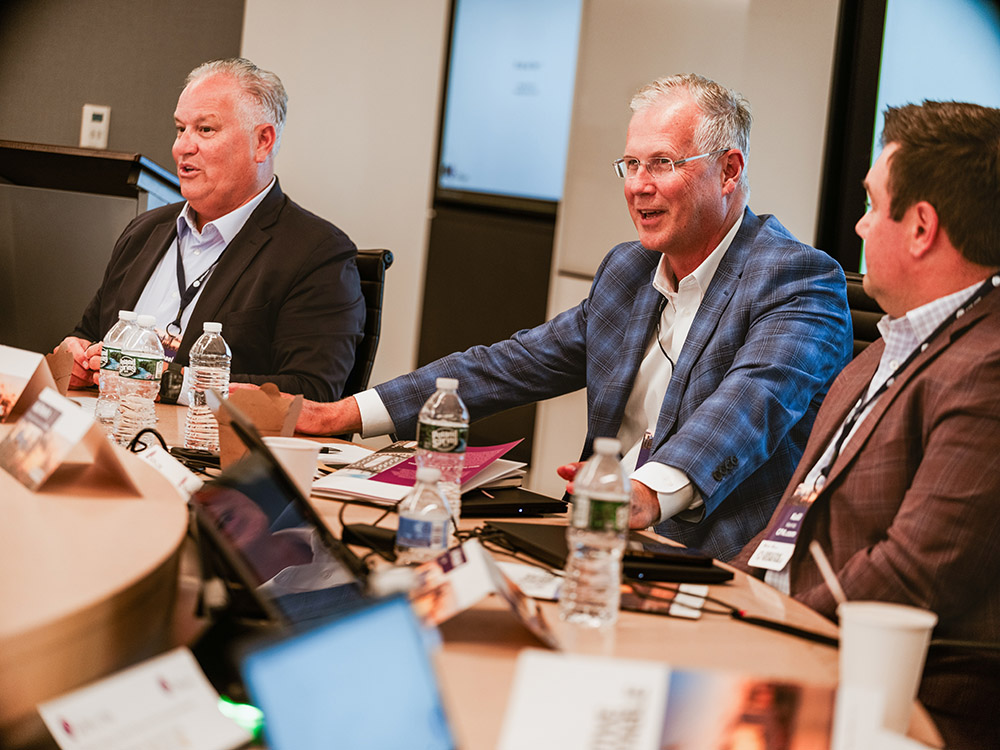
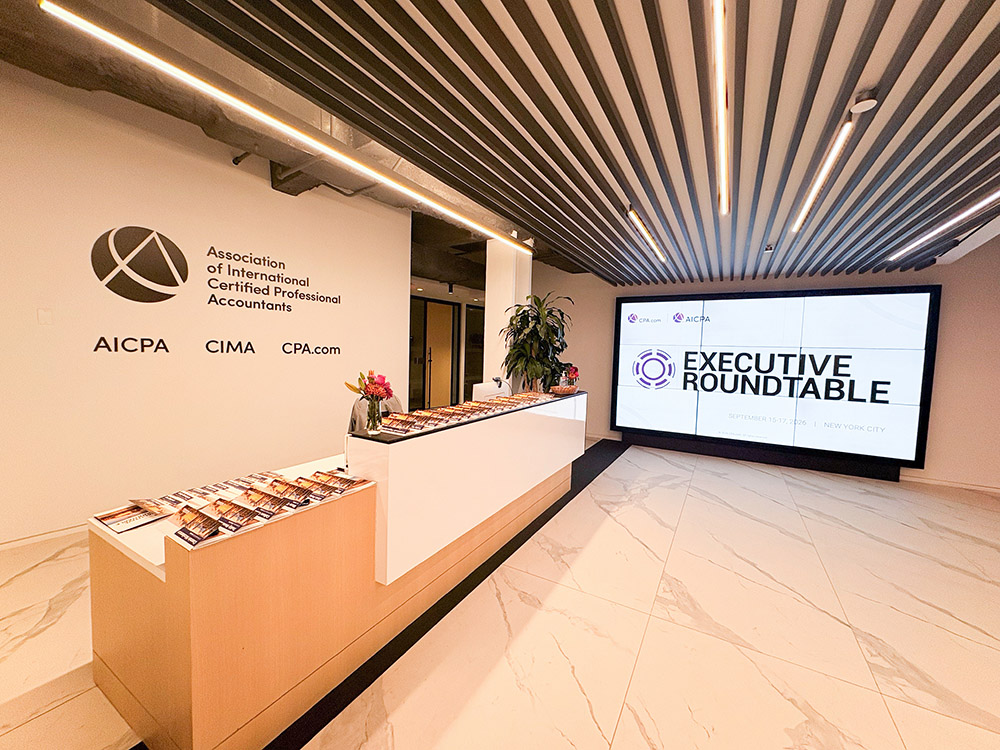
This year’s event, held over two days in New York City, was the largest Roundtable yet. More than 80 innovators filled the room, including CEOs and co-founders from 45+ technology companies, firm leaders, consultants and practitioners. What emerged was more than a conversation. It was a shared vision for where accounting and technology go from here built by the very people who will make it happen.
Here are four themes that stood out:
AI agents meet firms where they already work
One of the most notable shifts is that AI agents are increasingly showing up inside the systems firms already use, rather than asking firms to adopt something new. A fast-growing category of horizontal, agent-enabling platforms is working across tax, audit, and advisory simultaneously — layering intelligence onto existing systems of record rather than replacing them.This "add-on" approach is expanding rapidly because it lowers the barrier to a "yes" from firms. Platforms used to automate how work got organized — but a human still did the work inside the container. Now, agents are starting to do that work directly, with humans reviewing and signing off.
Though not every company is taking that path. A handful are building entirely new systems of record from the ground up, including new tax filing platforms — a notable development in a market that hasn't seen a genuinely new entrant in decades. The bet is that owning the full stack allows for deeper AI-native capability than layering onto legacy infrastructure ever could. It's too early to know which approach wins, but both are reshaping what firms should expect from their tech stack going forward.
- As AI does more of the work, trust and judgment matter more
Trust has always been at the core of the accounting profession. As AI takes on more of the mechanical work, the CPA’s value increasingly shifts to judgment — the ability to interpret, advise and stand behind a conclusion. Clients are looking for a perspective they can trust, creating an opportunity for practitioners to deliver greater value for their clients. This is playing out differently across core practice areas:- Audit isn't evolving gently — it's being restructured in real time by evolving standards, methodology and skill sets. But the mission hasn't changed. AI is amplifying auditor judgment, not replacing it. It’s concentrating the role further into forward-looking insight for stakeholders. Because auditors are inherently skeptical, adoption depends on proof, not promises — and methodology, not the tech itself, is becoming the real differentiator for firms.
- Tax is moving toward a structured, visible service model where compliance becomes a byproduct of advisory rather than the whole job. The theme heard consistently throughout the Roundtable is that you can flip today's roughly 80/20 split of compliance-to-advisory work to 20/80, with planning and specialized advisory as the growth engine.
- Client advisory services (CAS) is shifting from selling hours to selling judgment. Leading CAS practices are growing faster than other service lines, typically through industry specialization. The work ahead is less about volume of clients and more about accelerating advisor competency rooted in real industry knowledge.
Value pricing becomes the imperative
The move to value pricing has been discussed for years, but this year the conversation shifted from "should we" to "we have no choice." As AI compresses the time compliance work takes, hourly billing breaks down fast — a firm can't bill by the hour for something that now takes minutes, especially as clients start to notice.The shift is toward pricing based on the value and outcomes a service delivers, not the hours behind it — often structured as three-tier, subscription-style packages that account for the advisory component. Just as important is who sets the price. Firms who are seeing the most success have moved pricing decisions out of individual partners' hands and into a centralized process, so pricing reflects the full value delivered rather than each partner's comfort level with a discount.
- People and process determine who pulls ahead
Technology is the catalyst for transformation, but not the lone differentiator. What separates firms making real progress is tone at the top, dedicated transformation resources, and a willingness to rethink how work — and people — move through the firm.
The traditional mentorship model, where junior staff learn by doing years of hands-on compliance work, is compressing. New hires are moving into reviewer roles earlier, validating what AI produces rather than building it from scratch, which means firms need to teach judgment and review skills faster than before.
At the same time, a new kind of role is emerging, people who can direct AI agents effectively across a workflow, sometimes called "orchestrators." It's a scarce skill today, but firms identifying and developing these people early are already pulling ahead. None of this happens on a five- or ten-year plan anymore — firms are shifting to shorter, more agile cycles, testing, learning and adjusting as both the technology and the talent pool keep moving.
The takeaway
This year's Executive Roundtable made one thing clear, and that’s that firms have many innovative technology options to choose from. The work ahead is now more about building the right foundation, aligning people, process, and technology around judgment and outcomes, not just efficiency. The firms that do this well won't just move faster — they'll deepen the trust that's always defined the profession.
Highlights from the 2026 CPA.com and AICPA Executive Roundtable in New York